
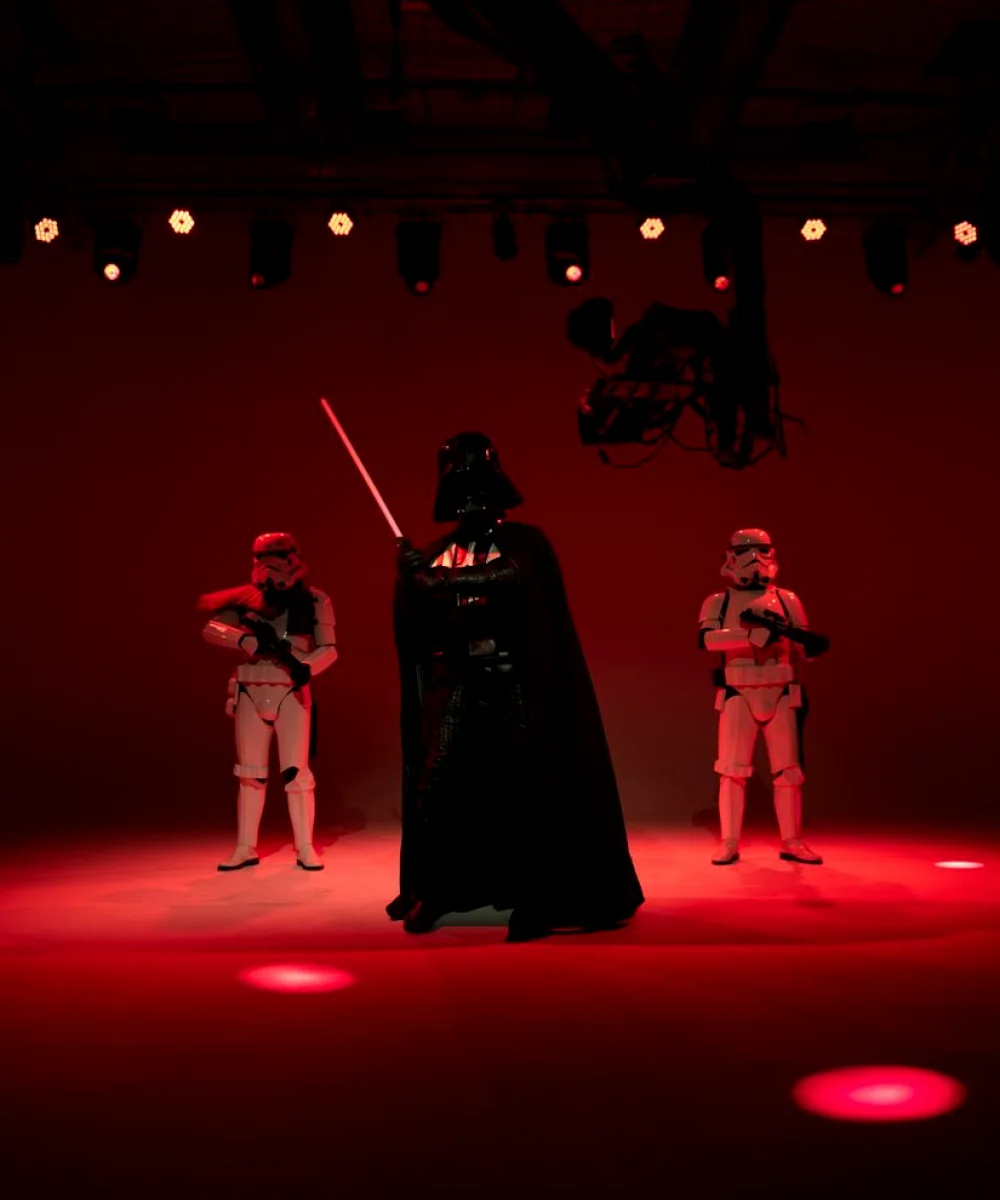
Start with what the camera will actually see
Next, note the distance between subject and background. Light that flatters a presenter can easily spill onto a backdrop and wash out its colour, or throw a second shadow onto a wall behind them. Write down how far each subject stands from the nearest surface, because that figure decides whether you can separate the person from the set with a back light or whether you must flag and shutter the fixtures. Finally, record the ceiling height and the rigging points already in place. Moving a hanging position later costs more time than any other late change, so settle the physical limits of the room before you settle anything about the look.
- List every camera position and the widest and tightest shot from each
- Note which subjects move and which stay put
- Measure subject-to-background distances
- Record ceiling height and available rigging points
Settle colour temperature early and keep it consistent
Colour temperature is the question teams most often leave until the first rehearsal, and it is the one that causes the most re-work. Decide whether the studio will run on tungsten-balanced, daylight-balanced or a mix, and write the figure on the plot. If the set includes practical lamps, window light or LED screens, note what colour each of those actually produces, because they will be in shot whether you plan for them or not. Mixed sources are not forbidden, but they need a decision rather than an accident. A warm practical in the background beside cool key light can look intentional if it is balanced deliberately, and looks like a fault if it simply happens. Walk the set with a colour meter or at least a camera with a consistent white balance preset and look at the result on a monitor, not by eye.
Check that all fixtures of one type match each other. Units bought at different times, or fitted with lamps of different age, drift apart, and the difference shows most on skin tones and white shirts. If you plan to use colour mixing fixtures for the set, agree on a small number of named presets so that the operator can return to the same look after a change. Lastly, confirm the white balance procedure with whoever runs the cameras. A lighting decision and a camera decision are one decision seen from two sides, and it helps to agree who sets the reference and when.
- Choose one base colour temperature and write it on the plot
- Identify practicals, windows and screens as separate sources
- Check fixtures of one type match in output and colour
- Agree named colour presets with the operator
Think about dimming control before you buy or hire
Dimming is easy to treat as an afterthought and hard to fix afterwards. Before deciding, ask what the control surface has to do on the day. Does the show need only a few static looks, or cues that change during a programme? A simple desk with memories may be plenty for a regular studio set, while a show with many scene changes benefits from a console that can store, name and recall cues reliably. Check how each fixture is controlled. Some run from a dimmer rack, others take data directly, and the two do not always mix comfortably on one circuit. Count the channels you will need and leave room above that figure, because a set that grows by a few fixtures should not force a change of desk. Confirm the addressing scheme on paper so that nobody has to guess at patching when something goes wrong.
Consider how the dimming curve looks on camera. At low levels some fixtures flicker, shift colour or step visibly, and a camera shooting at certain shutter settings shows that more readily than the eye does. Test fades at the lowest levels you expect to use, on a monitor, before you commit. Finally, think about who will operate the desk. A rig that only one person understands is a risk to every show. Ask whether the cue list and patch notes are clear enough for a second operator to pick up in an hour.
- Decide between static looks and cued scene changes
- Count control channels and leave spare capacity
- Test low-level fades on camera for flicker and colour shift
- Make sure a second operator could run the desk from the notes
Check the people and the audience, not only the set
Lighting is judged on faces. Before settling the plot, ask who will stand under it. Presenters with glasses need key light placed to avoid reflections, and a guest with a shiny bald head or deep-set eyes may need the angle softened or raised. Try the proposed positions with a real person standing in the spot, ideally in the clothes they will wear, because a patterned jacket can behave very differently from a plain one. If there is a live audience, consider how the stage light reaches them and how their light reaches the stage. Audience members who sit in a dark void look absent on camera, while an audience lit too brightly pulls attention from the presenter. A modest, even wash on the front rows is often enough to give the room life without competing with the main subject.
Think about comfort as well. Fixtures close to a presenter add heat, and a rig that is pleasant for a five minute test can be tiring across a long recording. Check the distance and, where you can, the output level, and ask the presenter how it feels after some time under it. Also consider eye line and glare. A bright fixture placed where a presenter must look when reading from a prompter or a monitor can make them squint, and the camera will record that. A short walk through the real show, with someone playing each role, finds these problems quickly.
- Test positions with a real person in their actual clothing
- Plan a gentle wash for audience rows in shot
- Check heat and glare over a full recording length
- Review eye lines against prompters and monitors
Confirm the practical limits before you commit
The last group of questions is about the room rather than the picture. How much power is available on the circuits you plan to use, and does the rig stay within it with some margin? A plot that looks fine on paper but trips a breaker during rehearsal costs more than the time it takes to check beforehand. Ask a qualified electrician to confirm capacity if you are in any doubt, and never rely on a guess. Consider the schedule for setting up and striking. If the studio is shared, a complicated plot that takes half a day to rig may not be workable, however good it looks. Write down how long the rig takes to put up, to focus and to take down, and compare that with the time you really have. A simpler plot that is ready on time will usually produce a better programme than an ambitious one that is still being focused when the cameras roll.
Finally, think about maintenance. Lamps age, lenses collect dust and cables wear at the connectors. Decide who is responsible for checking fixtures between shows and where spares are kept, so that a failed unit is a minor interruption rather than a lost recording. With these questions answered on paper, the decision itself usually becomes straightforward. Whatever remains unclear is worth testing in the room, with the cameras and the people involved, before anything is bought, hired or locked into a schedule.
- Check circuit capacity with a margin to spare
- Compare rigging and striking time with the time available
- Assign responsibility for lamp checks and spares
A lighting decision made well is mostly a matter of asking the right questions in the right order: what the camera sees, what colour it sees it in, how the rig is controlled, who stands under it and what the room allows. Work through the list with the real set and real people where you can, and write the answers on the plot. The result is a rig that behaves predictably on the day, which is what presenters and operators both want.
Further reading
-
What Stage Lighting Design Costs and What Moves the Price
A plain look at how lighting design is priced for studio and live work, which decisions push the figure up or down, and what to settle before asking anyone for a quote.
-
Audio Sync Mistakes We See in Studios and How to Avoid Them
Most lip-sync faults trace back to a handful of repeatable habits. Thomas Whitcombe walks through the common audio synchronisation mistakes and the simple checks that stop them.
-
What Camera Configuration Guidance Costs and What Moves the Price
A plain account of how we price camera configuration guides and reviews, and which parts of a studio setup add time, from camera count to tally and control systems.