
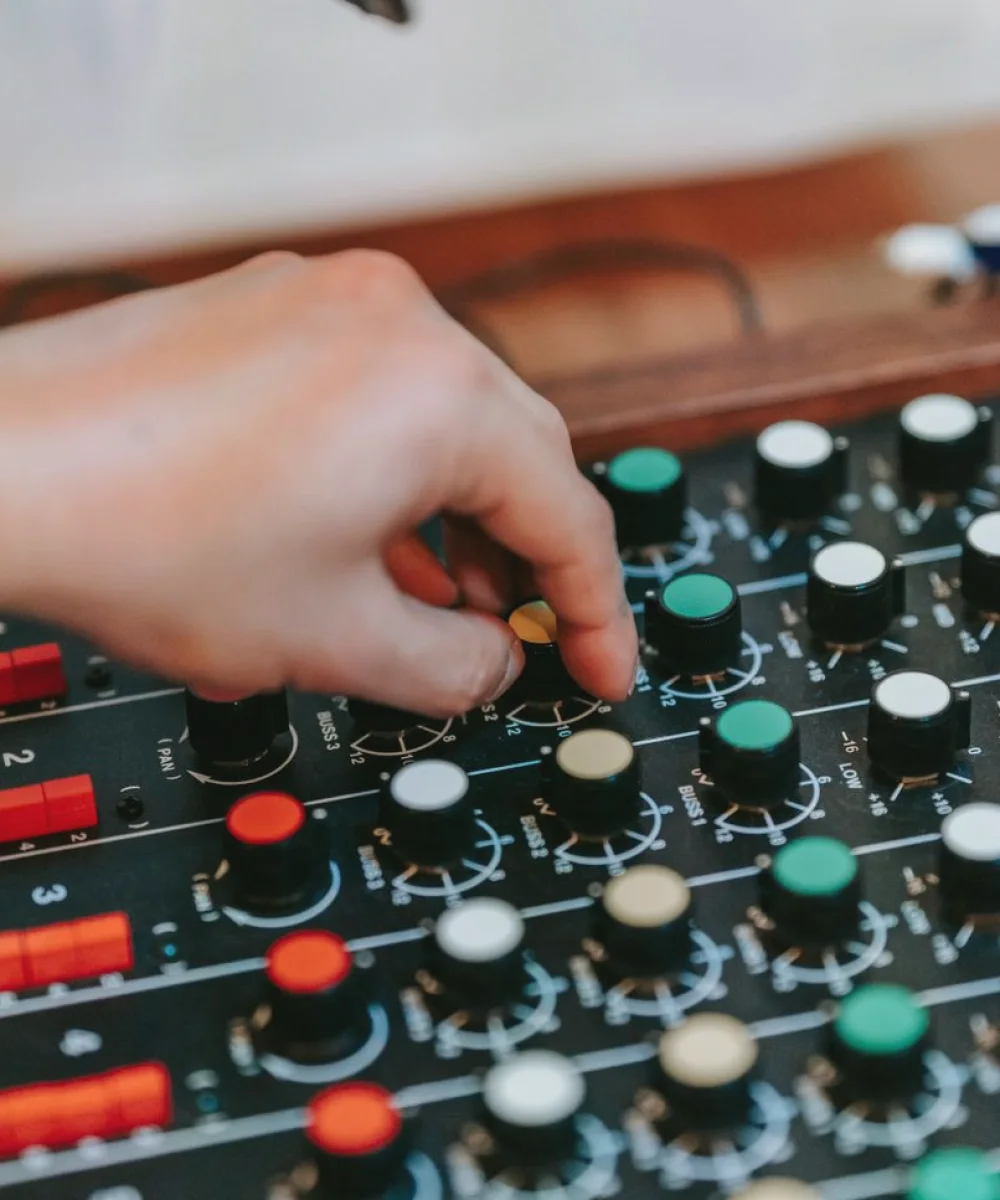
Start with the signal map, not the schedule
Label each line with its format and frame rate, and note where audio travels embedded and where it travels separately. A surprising number of delivery problems trace back to a feed that was assumed to be one format and was quietly another. If the map shows a conversion, mark which device does it and who owns that device on the day.
Keep the map to one page. If it needs two, the show probably needs two maps, one for acquisition and one for delivery, joined at a clearly named point such as the gallery output.
- List every source with its format and frame rate
- Mark each conversion and the device that performs it
- Name the owner of every patch point
- Keep acquisition and delivery on separate sheets if one page overflows
Turn the map into a cue structure
Once the signals are fixed, cueing becomes much easier to plan, because you know which cues depend on hardware and which depend on people. A cue that calls a camera shot is a person speaking to a person. A cue that fires a playback or switches a router crosspoint is a person speaking to a machine, and that deserves more rehearsal time and a written fallback.
I like to number cues in the order the director will actually call them, not the order they appear in the script. Then add a column for the standby warning and a column for who confirms. Confirmation matters: in a quiet gallery a silent operator and a missing operator look identical.
Agree the wording of the calls before the first rehearsal. Short, consistent phrases such as standby, ready, go, and a plain word for a cancel, mean fewer misheard instructions when the room gets loud.
Plan recording as a separate chain
Recording is often treated as something that simply happens alongside transmission. In practice it is its own chain with its own failure points, and it deserves its own line on the run sheet. Decide what is being recorded, whether that is the programme output, isolated camera feeds, or both, and where each file lands.
Check storage against the running time with room to spare, and agree who watches the record status during the show. A recorder that stopped at minute twelve is far worse discovered at minute ninety. Where a second recorder is available, run it from a different point in the chain, so a fault in one path does not take out both copies.
Name files in a pattern the whole team understands before the show starts. Clear names save the editor an hour later and prevent the wrong take being sent out.
- Decide which feeds are recorded and where they are stored
- Assign one person to watch record status
- Run a backup recorder from a different point in the chain
- Agree a file naming pattern before doors open
Check timing across the whole chain
Audio and picture can leave the gallery together and arrive apart. Each conversion, processor and network hop adds delay, and the amounts rarely match between video and sound. During the technical rehearsal, measure the offset at the delivery end rather than trusting the figures printed on the equipment.
A simple clap or a test sequence sent from the gallery and observed at the receiving point will show you the real offset in a few minutes. Record the result on the run sheet with the date and the configuration it applies to, because any later change to the chain makes the number out of date.
If you must correct, correct once and at one place. Stacking small delay adjustments at several devices makes the next fault very hard to trace, and the operator who made them is rarely the one standing there when it drifts.
Prepare delivery and a fallback for it
Delivery is the final handover, and it is where the audience meets everything you planned. Confirm the destination, the format it expects, the contact at the receiving end and the time the line is available for testing. Do a full-length send of the real programme output, not a short test pattern, at least once before the live show.
Then write the fallback. What happens if the primary path fails at the start, and what happens if it fails halfway through? A fallback that nobody has tried is only a hope. Agree the trigger for switching, who decides, and how the receiving end is told.
Keep this section of the run sheet brief and bold enough to read at a glance. When something breaks, nobody wants to read paragraphs.
- Confirm destination, format and receiving contact
- Send the full programme output at least once in advance
- Write down who decides to switch to the fallback
- Tell the receiving end what to expect if you do
Run the sheet in rehearsal and revise it
A run sheet earns its place only after a rehearsal has tested it. Play the show through from the first source to the delivery point, calling cues exactly as planned, and let the team mark where the sheet was unclear. Expect to change it; a sheet that survives a first rehearsal untouched usually was not read closely.
After each revision, circulate one current version and remove the old ones from the gallery. Two versions in circulation produce exactly the confusion the sheet was meant to prevent.
Finally, take it into the next production as a starting point. Most of the signal map and the cue wording will carry over, and each show leaves the sheet a little sharper than before.
A live show runs well when its handovers are written down: the signal map, the cue calls, the recording chain, the measured timing and the delivery fallback. None of this needs special equipment, only a quiet hour with a pencil before rehearsal. Build the sheet, test it with the whole team, correct it, and keep one current copy in the gallery. The next show will start from a better place than the last.
Further reading
-

Setting Up a Studio Camera for Consistent Pictures, Step by Step
A practical walk through camera, lens, tally and camera control setup in the order that saves time, so every shot in a studio matches from the first rehearsal to the last take.
-

The Tools We Use to Review a Working Gallery
A look at the checklists, signal tools and monitoring methods we rely on when reviewing control room workflows, and why we keep the kit list short and the method clear.
-
A Stage Lighting Checklist to Work Through Before You Decide
Before you commit to a lighting plot, colour temperature or dimming setup, this checklist covers the questions that matter most for presenters, sets and live audiences in a working studio.